
Bad greens, frank dispatches: Doug Lowe explains the trouble
At Greensboro Country Club, Doug Lowe’s maintenance reports bring members into the decisions behind two courses—and explain why recovery cannot always follow the tournament calendar.
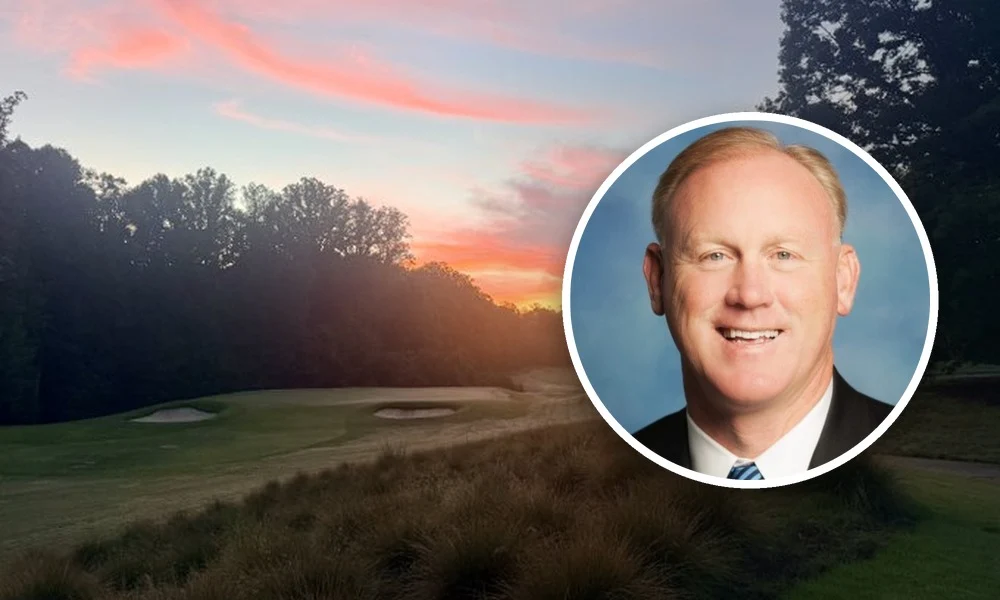
The member-guest was approaching, and Doug Lowe had unwelcome news. After surviving most of summer, Greensboro Country Club’s bentgrass greens were yellowing and thinning. Heat and heavy rain had left the turf short of oxygen. As Golf Course Trades recounts in its October 22 profile, Lowe told members the surfaces fell short of what his crew wanted. His explanation included something a tournament deadline could not supply: cooler weather to bring soil temperatures down and support new roots.[1]
That dispatch offers a useful introduction to Lowe’s job. He has overseen golf and grounds maintenance at Greensboro since May 2000, with responsibility for Irving Park, designed by Donald Ross, and the Farm, redesigned by Donald Steel. Both properties have clubhouses and recreational facilities. At this member-owned club, his reports make the work legible to the people who play the courses, including when the news is disappointing.[1]
Eight days earlier, his September 9 update had explained how quickly routine maintenance could become damage control. A new mower at the Farm suffered a loose fitting, depositing hydraulic fluid over two and a half fairways. It took a colleague to spot the trail and stop the operator, whose seat offered no clear view of the faint leak. At Irving Park, a sprayer developed a separate leak; moving between spot-treatment areas gave its operator fewer opportunities to detect it.[1]
The value of those details is that they explain failure without reducing it to somebody’s carelessness. They also show the importance of another employee noticing what the driver could not. Elsewhere at Irving Park, the crew was dealing with fallen timber and debris from two storms three weeks apart. Tournament preparation was competing for hours with cleanup that could not simply be omitted from the schedule.[1]
Disease required a different adjustment at the Farm. When take-all root rot symptoms reappeared on its ultradwarf bermudagrass greens, Lowe revised the planned aerification: small cores would be removed as well as holes made with solid tines. Fungicide followed, with irrigation used to carry the treatment into the soil. For members, the report connected a maintenance intervention to the problem behind it, rather than leaving them with only its effect on play.[1]
Lowe’s education in that work began at 13 at Jamestown Park Golf Course in North Carolina, learning from the head professional and superintendent. He earned agronomy and horticulture degrees at North Carolina State University in 1988, then worked at James River, The Country Club of North Carolina and Treyburn before Greensboro. At Treyburn, he gave Brian Green his first assistant superintendent position. Decades later, Green and his former mentor served together on the Carolinas GCSA board.[1]
The practical lesson in the reports extends beyond the maintenance team. Faced with weakened greens, Lowe asked members to repair ball marks carefully and avoid sharp cleated turns or dragging their feet. He distinguished between work the crew could undertake, recovery that needed cooler conditions and damage golfers could help prevent. That gives members a role more useful than simply waiting for better greens.[1]