Less Rustle, Less Bulk: The Design Trade-Off Behind Quiet Golf Waterproofs
Sunderland’s Whisperdry Stealth and ProQuip’s Paige take different routes to unobtrusive rainwear, with softness, adjustable shapes and a shared need for layers.
A golf waterproof has two jobs that can pull against each other: closing out the weather and staying out of the swing. Noise adds another consideration. A jacket can leave enough room through the shoulders yet still announce every movement with a rustle. Sunderland’s Whisperdry Stealth and ProQuip’s women’s Paige hooded jacket approach that problem through soft, lightweight fabrics, then diverge in how they manage shape, coverage and storage. Their most useful design story is about what they leave out: bulk, stiffness and substantial warmth.[1][2]
Softness with a purpose
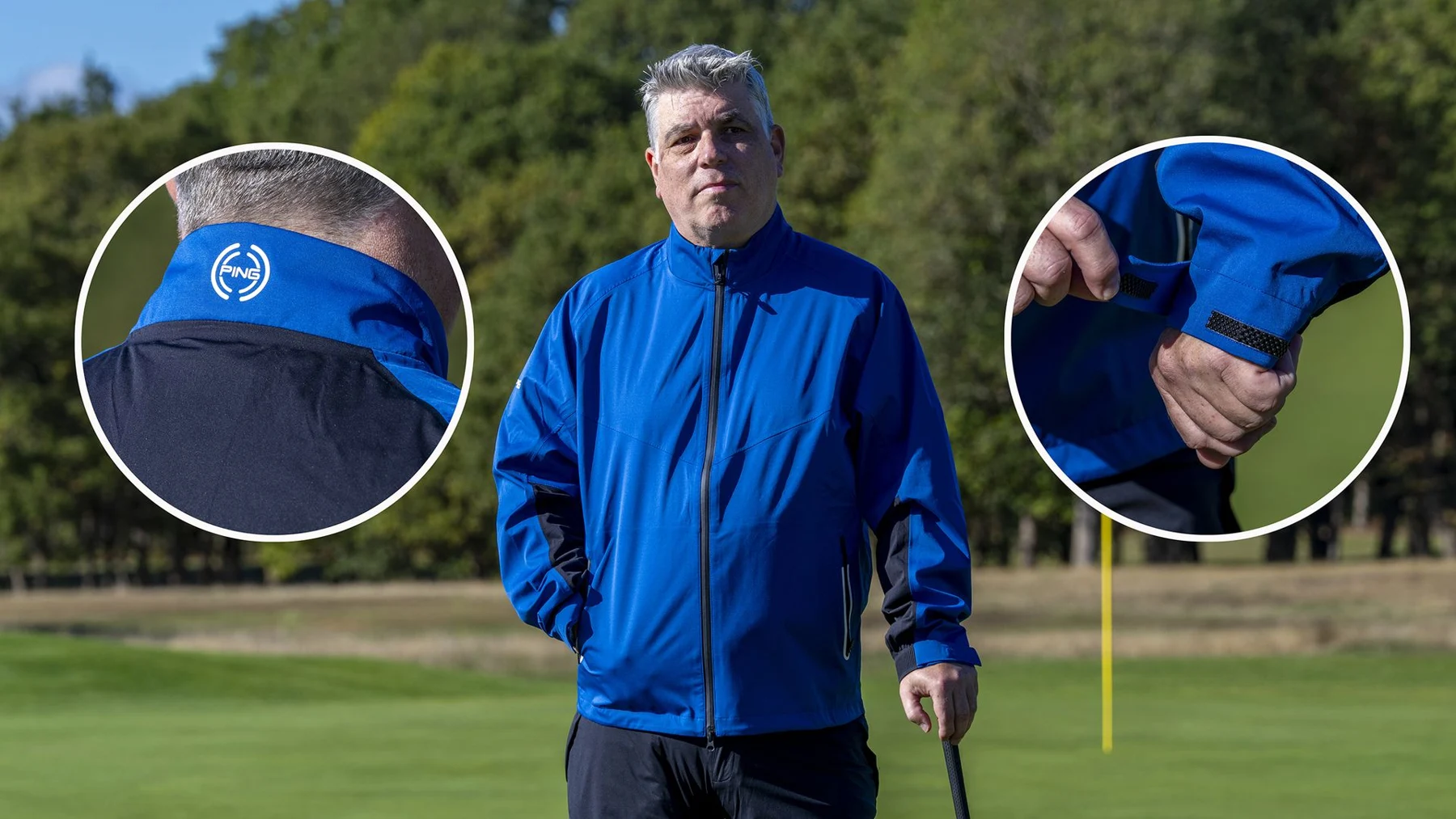
Sunderland builds the Whisperdry Stealth around four-way stretch and a soft-touch finish intended to reduce fabric noise. The stretch addresses movement; the finish addresses the distraction that can accompany it. Sunderland specifies 100% recycled polyester and says the yarn comes from 17 recycled plastic bottles. That is a material specification, rather than proof of the jacket’s overall environmental impact. Visually, the six-colour range gives this technical shell scope beyond an exclusively black-and-grey wardrobe, including Pine Green and gunmetal/black.[1]
The quieter fabric still needs a complete weatherproof construction around it. Sunderland specifies an 8,000mm waterproof rating, fully sealed seams and waterproof lock-down zips at the front and pockets. Its PFC-free water-repellent finish is intended to encourage surface beading. These details perform separate roles: the outer finish deals with surface water, while sealed stitching and protected openings address potential entry points. Soft fabric is only part of the design.[1]
Control the shape
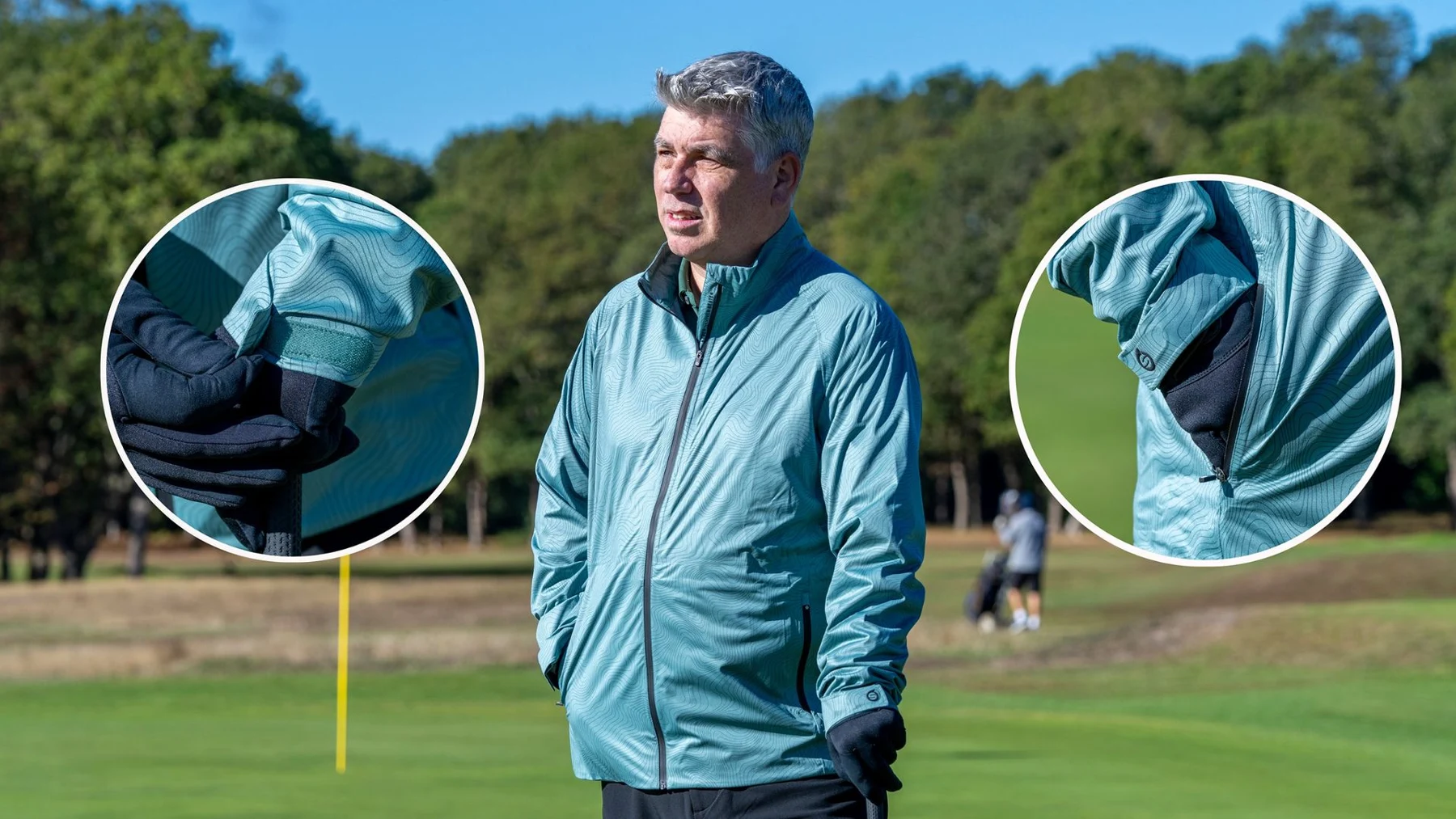
The Paige puts greater emphasis on adjusting the silhouette. Internal waist toggles and side tabs allow the body to be drawn in, limiting loose material around the putting stance. Adjustable elasticated cuffs accommodate a jumper underneath, then close down at the wrists. Its generous hood is sized to cover a hat, with side toggles to secure it. Where Sunderland concentrates on a high, fleece-lined collar, ProQuip extends coverage over the head.[1][2]
That difference carries through to the visual treatment. The Paige uses navy or black as a restrained base, interrupted by side accents in bonnie blue, lime or silver. The adjustment points make fit part of the styling rather than leaving the jacket as a fixed, loose outline. Sunderland’s hidden hem toggles, accessed through the pockets, offer another way to alter the shape without leaving the adjustment hardware exposed.[1][2]
Leave room for warmth
Portability is the other benefit of keeping bulk down. The Sunderland folds into its own left pocket; the Paige rolls compactly for bag storage and includes a mesh lining. Neither should be treated as a substitute for an insulating layer in cold conditions. That makes the fit over a midlayer important: enough room for warmth beneath, with the waist, hem and cuffs still adjustable. The useful fitting-room check is therefore a swing and a putting stance over the layers you actually wear—not simply how neatly the shell sits over a polo.[1][2]