Pratima Sherpa’s Second Golf Career Starts With Access
Once forced to change hands because clubs were scarce, the San Fernando Valley junior-program manager now works to make golf accessible to children.
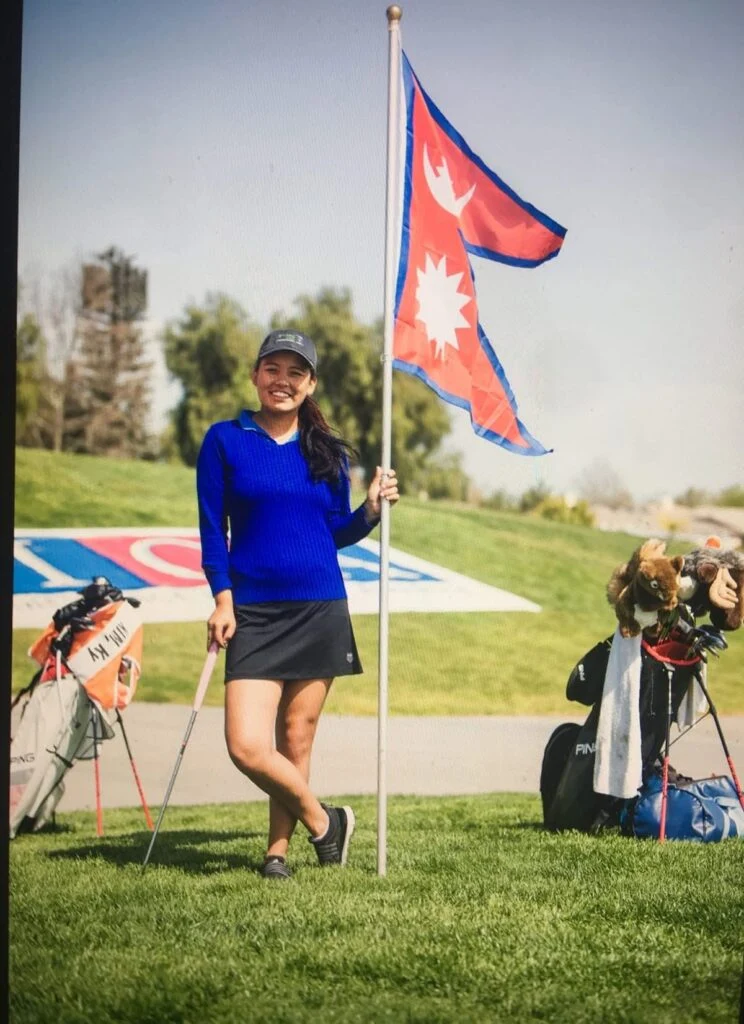
Pratima Sherpa’s work in golf now centres on someone else’s chance to play. As the SCGA Junior Golf Foundation’s program manager for the San Fernando Valley, she develops and expands a program intended to make the sport accessible to children. Helping young players who need financial assistance has particular meaning for a golfer whose own introduction depended on improvised equipment and adults willing to make room for her.[1]
That role represents a deliberate change of direction, rather than simply the next reward for competitive success. Sherpa had become Nepal’s top-ranked female golfer by 16 and competed on the Symetra Tour, now the Epson Tour, at 19. During the pandemic, she worried about being far from her parents and wanted to provide for them. The pressures and financial risks of pursuing professional golf also weighed on her. She began looking for a different future within the sport.[1]
A different golf career
After transferring to Cal State L.A. to play golf and earn her degree, Sherpa found an alternative through a coach who recognised her interest in mentorship and suggested coaching in America. In Nepal, she had understood a golf career as a choice between turning professional and leaving the ambition behind. Teaching gave her a route she had not known to consider: remaining in the game while helping other people enter it.[1]
Her childhood at Royal Nepal Golf Club in Kathmandu gives that work a specific context. Her mother, Kalpana, maintained the course; her father, Pasang, worked in security. When Sherpa was five, the family moved into a maintenance shed, living rent-free in exchange for looking after the equipment. Their roughly 200-square-foot living space included a kitchen and overlooked the par-three third hole. She could watch the game closely long before she had conventional equipment to play it.[1]
Pasang shaped a wooden branch into a club, and Sherpa began copying the members’ swings. An invitation to a junior camp followed, but proper equipment brought another barrier: she was left-handed, and suitable clubs were difficult to find. Her coaches had her switch hands. She adapted quickly, yet the episode remains a concrete example of access being determined by what equipment happens to be available.[1]
Her progress also depended on support beyond instruction. She won her first tournament at 11 with a mixed set of clubs; later, the Nepal Golf Association gave her a full PING set. The Montano family in Ventura hosted her while she competed in California junior events. She subsequently joined the team at Santa Barbara City College. Those interventions supplied equipment, accommodation and competitive opportunities at different stages—practical help that talent alone could not provide.[1]
Competition still has a place in Sherpa’s life, including a recent appearance at the Himalayan Open in Colorado. But it no longer defines her entire career. Her longer-term ambition is to open the Pratima Sherpa Golf Academy in Nepal. For now, her work is in Southern California, helping children gain access to the sport. The important shift is in what counts as progress: another young player getting a chance, rather than only another result beside her own name.[1]