Pinehurst No. 11 Knows When to Leave the Spoil Heaps Behind
Ahead of its reported March 2027 public debut, GOLF.com’s preview suggests Pinehurst’s newest course finds its identity in the gaps between mining ridges.
The short par-four seventh offers a useful starting point for understanding Pinehurst No. 11. Its horseshoe-shaped green sits against a lake, several holes into a stretch of relatively familiar Sandhills terrain. For a course built partly among the remnants of a sand mine, that apparent change of subject matters. As GOLF.com describes in its October 29 preview, Bill Coore, Ben Crenshaw and lead associate Ryan Farrow have not made the industrial remains an uninterrupted spectacle. They have given them intervals.[1]
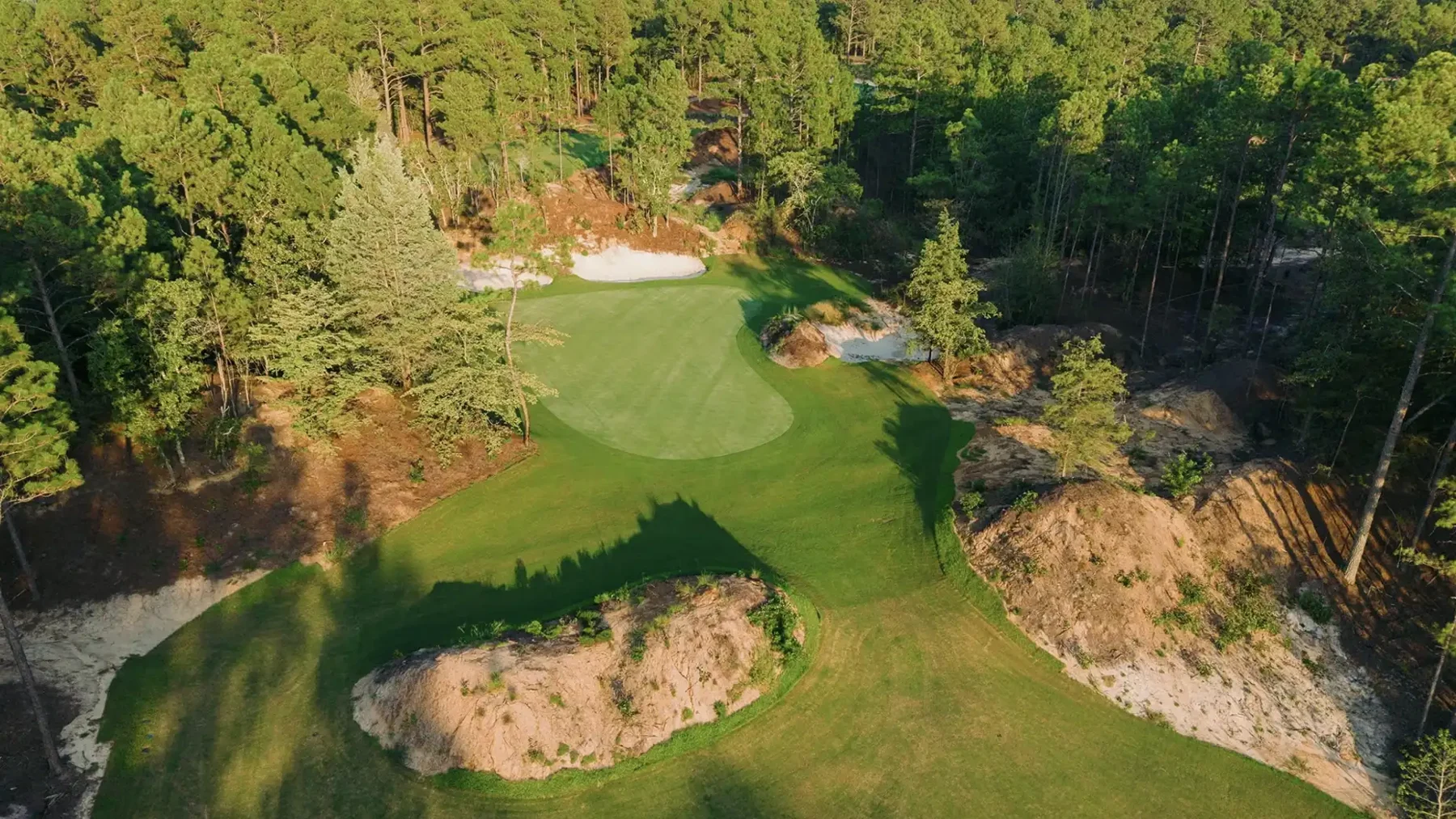
That is the architectural proposition worth watching when the course makes its reported public debut in March 2027. GOLF.com reports that Coore deliberately routed holes into and out of the most irregular ground, with ridges and spoil piles returning towards the finish. The distinction is between possessing unusual terrain and deciding how often to use it. A quieter passage can give the next encounter with a mining formation greater emphasis; relentless eccentricity risks making even the strangest feature routine.[1]
What the ridges conceal
The remnants also have a job beyond supplying scenery. At the par-four second, according to the preview, mining ridges flank the fairway’s right side, where a wayward drive can leave a blind approach. Position therefore affects the information available for the next shot, as well as its length and angle. Elsewhere, GOLF.com describes framing pines that make the playing corridors appear narrower than they are. These are two distinct challenges: ground that actually interrupts a view, and trees that encourage a misleading first impression.[1]
Against those complications, the putting surfaces supply another kind of restraint. GOLF.com characterises No. 11’s greens as calmer than those at neighbouring No. 10, completed in 2024, and the course itself as more intimate. Both occupy Pinehurst Sand Mines, four miles from No. 2, yet the preview presents markedly different designs. No. 11’s combination suggests a useful division of labour: the surrounding ground can carry much of the drama without every green needing to compete for attention.[1]
Permission to be particular
Its position within Pinehurst’s collection helps explain that freedom. “I’m not sure you’d want to build this as the first course at a resort,” Coore told GOLF.com, noting the ten alternatives for golfers whose tastes lie elsewhere. That is a more revealing assessment than a routine declaration of quality. A first course must introduce a place; an eleventh can pursue a narrower character. Here, that character comes from negotiating awkward landforms rather than smoothing every encounter into familiarity.[1]
Read this way, the seventh is integral to the design rather than a break from its main attraction. The lake-backed green and the later return to mining debris belong to the same argument about pacing. On the evidence of GOLF.com’s preview, No. 11’s most interesting decision is not simply to build around the spoil heaps. It is to let golfers spend time away from them.[1]