Two Bells, one blurred legacy: from Riviera to Torrey Pines
William P. and William F. Bell helped define Southern California golf, yet famous partnerships and a shared practice complicate the credit.
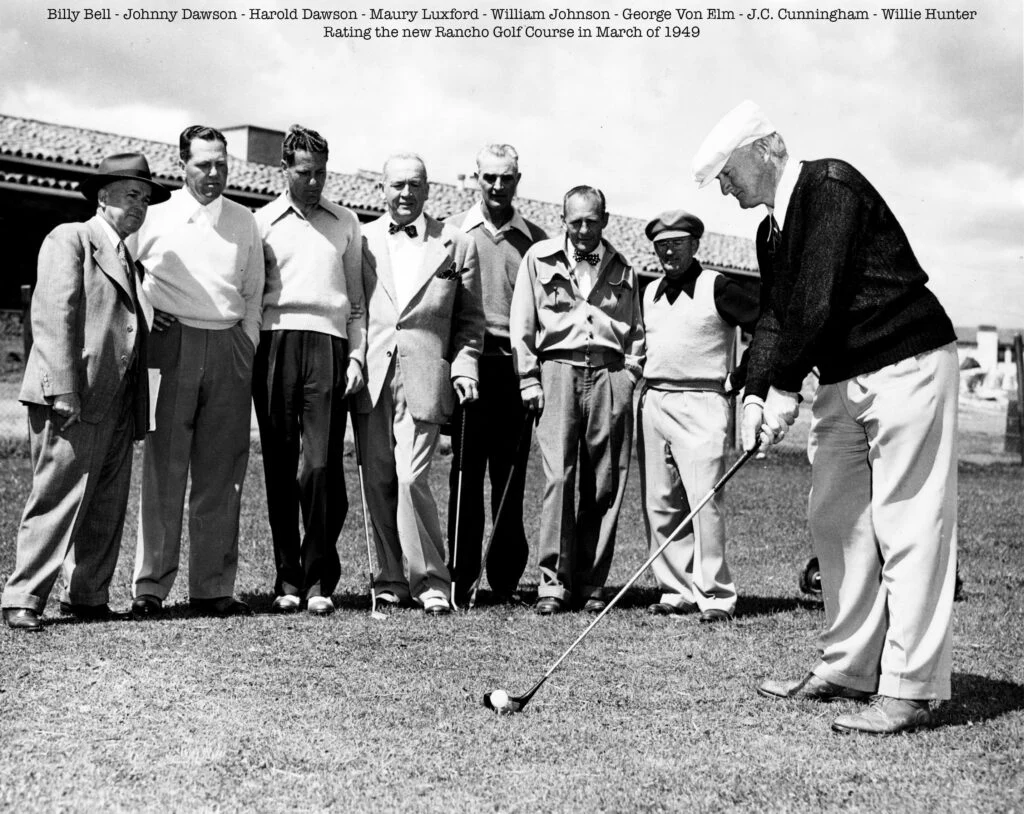
Torrey Pines presents a small puzzle with large consequences for golf history: which William Bell designed it? William P. Bell contracted with San Diego in 1950 to prepare plans for an 18-hole municipal course. But the eventual 36-hole scheme was approved in 1955, two years after his death. His son, William F. Bell, designed the North and South courses under the family practice’s name. Remembering the Bells as a single architectural dynasty can conceal the very achievements that deserve recognition.[1]
The name itself helps explain the confusion. After his father died in 1953, the younger Bell renamed the practice William P. Bell and Son in his honour. They had worked together after the Second World War, producing more than two dozen new designs between 1946 and 1953, including Tamarisk and Newport Beach country clubs. Yet the son’s career was substantial in its own right: more than 200 courses across the West, with Bermuda Dunes and Sandpiper among them. The family credit should not swallow the individual.[1]
Who gets to be the architect?
At Riviera, Bel-Air and Los Angeles Country Club, the elder Bell faces a different problem: the prominence of his collaborator, George Thomas Jr. Thomas’s own assessment was generous and explicit. In his 1927 book, Golf Architecture in America: Its Strategy and Construction, he credited Bell, who oversaw construction on most of his California work, with much of its success. He also recognised Bell as an accomplished architect. That acknowledgment places Bell inside the creative achievement, rather than outside it as someone merely executing instructions.[1]
Construction is the thread connecting these otherwise distinct careers. The father came through greenkeeping and construction supervision before opening his design practice in 1920. His strengths included intricate bunker edges, elaborate shaping, routing and drainage engineering on difficult sites. The son’s 36-hole Industry Hills project occupied a former landfill. Different assignments, but both demonstrate why making land work for golf belongs in the architectural discussion: drainage, shaping and the treatment of compromised ground determine what can actually be built.[1]
What survives shapes the reputation
For Bell Sr., San Diego, Woodland Hills and La Jolla country clubs preserve a body of work beyond the celebrated Thomas partnerships. Other designs cannot perform that service. Courses disappeared through the Depression and the postwar expansion of roads and buildings, removing places through which later golfers might have come to know his architecture.[1]
Royal Palms makes that loss particularly tangible. Built in 1927 on 350 clifftop acres in San Pedro, it was gone by 1933. There is no need to guess whether its survival would have made Bell famous. Its disappearance means that a substantial coastal project is absent from the surviving work by which his reputation can be judged. The Bells’ shared induction into the Southern California Golf Hall of Fame in 2017 recognised the family contribution; understanding it requires separating the two careers and looking beyond the best-known course names.[1]