St Enodoc’s Holywell: a short links with a full-sized brief
At just over 4,000 yards, St Enodoc’s Holywell Course makes its case through links terrain, tight greens and choices that distance alone cannot supply.
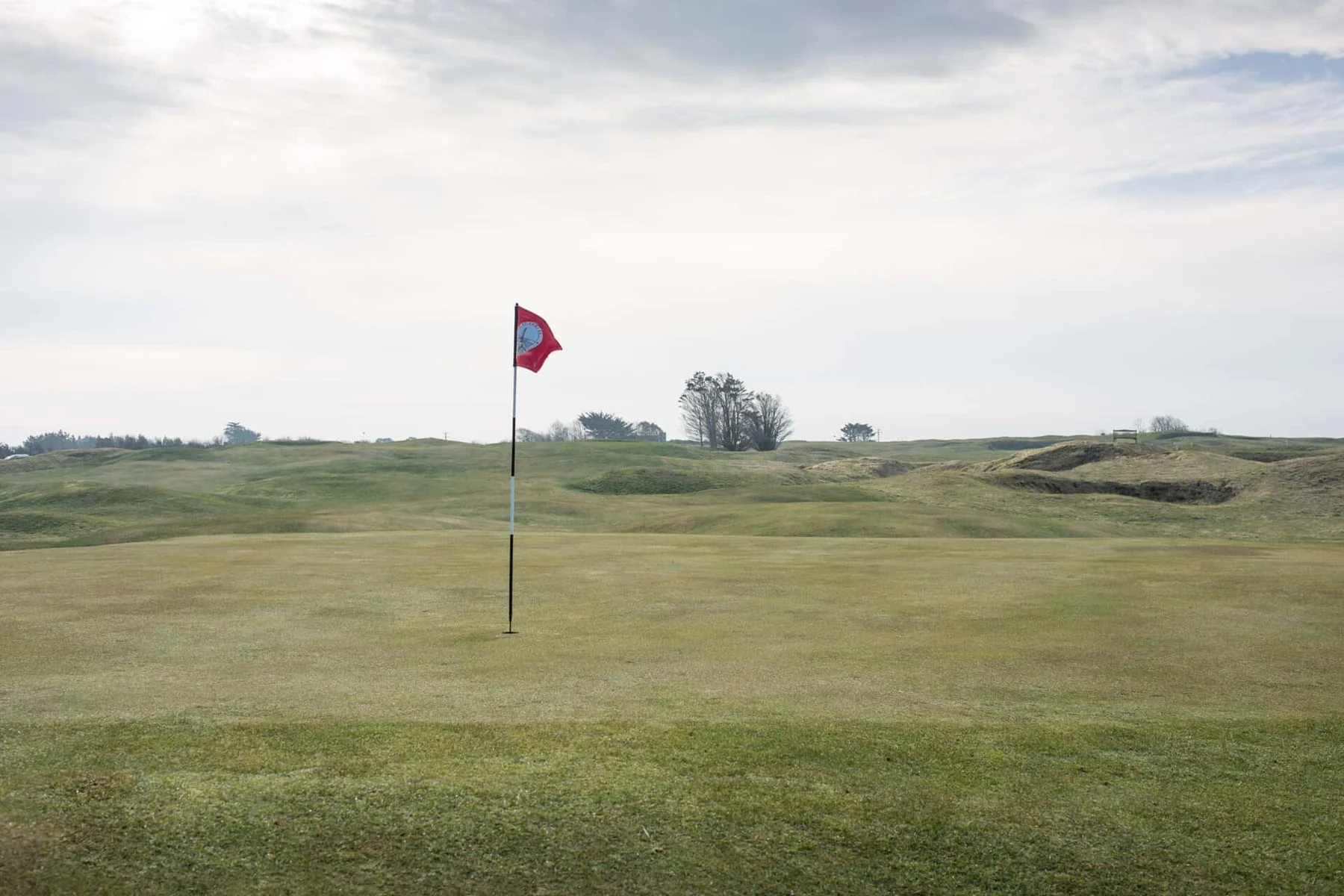
The most useful number on the Holywell scorecard is also the easiest to misread. At just over 4,000 yards, St Enodoc’s shorter course could be filed away as the gentle alternative to its celebrated Church Course. But yardage tells you how much ground a course covers, not how much golf it contains. Holywell’s interest lies in the combination of links terrain, tight greens and opportunities to play with different clubs.[1]
Its setting matters. These two courses occupy the same Cornish links venue, yet offer distinct experiences. The James Braid-designed Church Course supplies the famous name; Holywell supplies a smaller-scale proposition with its own character. There is no need to make the shorter course compete on its neighbour’s terms. The more revealing question is what it retains when the distance is reduced.[1]
Where the challenge sits
Tight greens are central to that answer. Getting close to a target and finding it accurately are different tasks. A shorter route does not remove the demand for a well-judged approach, and a small target gives the final shot into a hole significance that raw yardage cannot express. Holywell’s compact dimensions therefore need not make the golf insubstantial: the test can sit at the destination rather than in the distance required to reach it.[1]
The range of clubs is equally important. Holywell offers opportunities for driver, fairway woods and irons, rather than reducing the round to a succession of similar short shots. That distinction separates the idea of a course in miniature from a narrowly specialised practice exercise. Its appeal is not that every club must be used, but that a short scorecard need not prescribe a single way of playing.[1]
Links terrain gives those choices their context. Distance is only one component of a shot; the ground and the target help determine what makes sense. Holywell’s architectural interest rests on that relationship, rather than on an attempt to manufacture stature through length. It is a useful way to think about short-course design: retain the decisions and the demands on execution, even when there is less ground between tee and green.[1]
None of this requires calling Holywell the equal of the Church Course, or pretending the two offer identical tests. The stronger argument is that they do not need to. A shorter course earns its place when it has a coherent golfing identity, rather than existing only as preparation for something bigger. At Holywell, the links setting, compact targets and club options provide a substantive reason to consider the course on its own terms.[1]